|
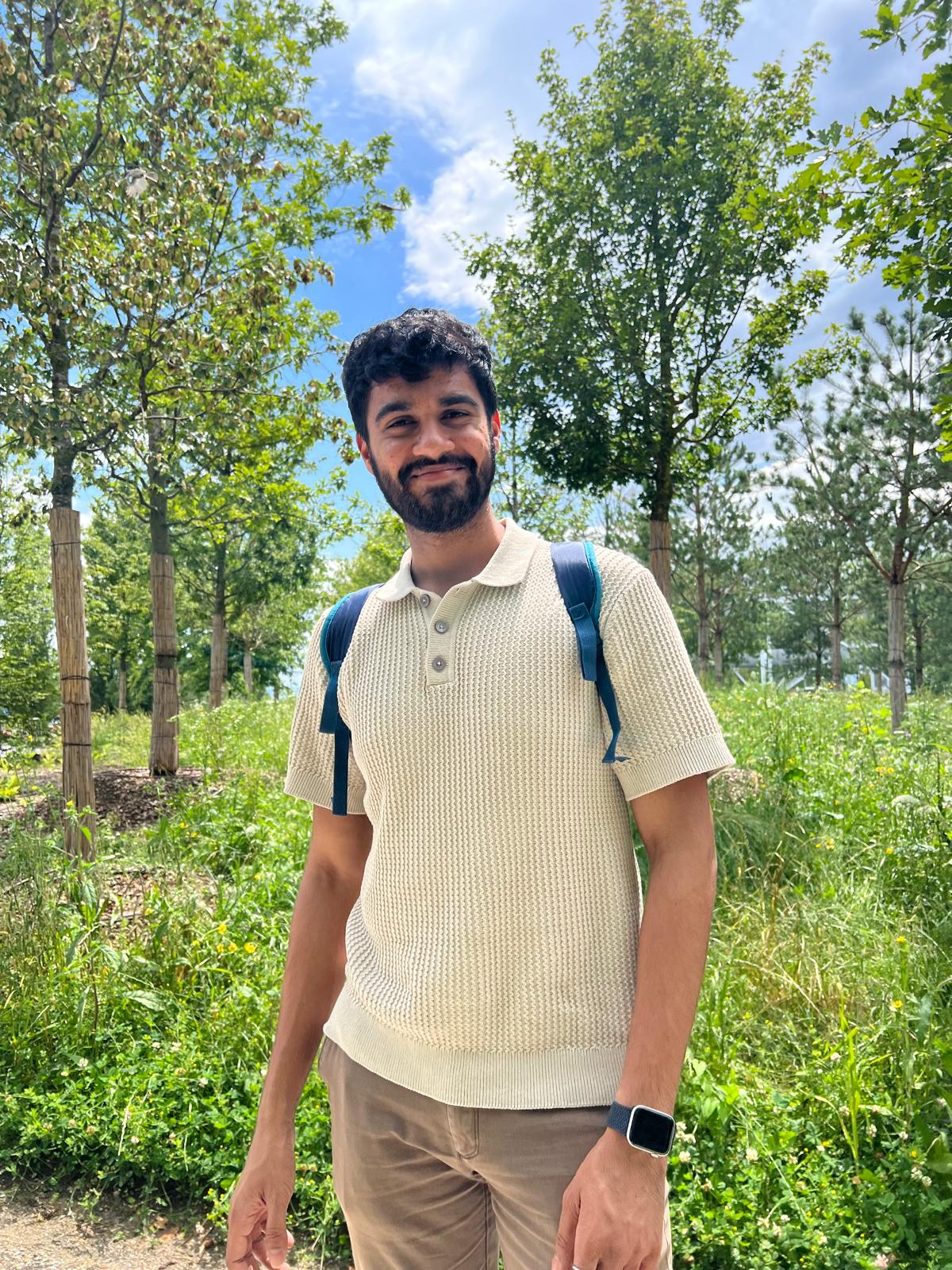
Adamya Singh Dhaker Hello! I am a PhD student at ETH Zürich and the Max Planck Institute for Intelligent Systems, supervised by Dr. Janneke Schwaner (Neuromechanics of Movement Group, MPI) and Prof. Robert Katzschmann (Soft Robotics Laboratory, ETH). Supported by the Max Planck-ETH Center for Learning Systems doctoral fellowship, I work on truly integrating biomechanical principles of passive mechanical adaptation in animals into soft robots to enhance their ‘embodied intelligence’ and reduce their active control requirements, so that they can be made easier to manufacture and scale for various contact-rich environments. Prior to starting my doctoral work, I greatly enjoyed my time in sunny Singapore, where received an M.Eng in mechanical engineering at NUS, and a B. Eng in aerospace engineering (minor in applied physics) at NTU. I was fortunate to work with Prof. Cecilia Laschi and Prof. Gianmarco Mengaldo on high-fidelity modeling of octopus arm biomechanics. I also spent some time as an ETH Robotics Student Fellow at the Soft Robotics Laboratory, ETH Zürich, working on a developing fluid-structure interaction framework for biohybrid robots. I deeply enjoyed collaborating Prof. Luca Dede’ and Prof. Francesco Regazzoni as a visiting researcher at the MOX Laboratory, Politecnico di Milano. Please feel free to email me if you would like to discuss my research, your research, any potential collaborations or if you have any questions 😊 Also, I love playing (and coaching) tennis! |
|






|
Research InterestsI am broadly interested in investigating the biomechanical principles underlying passive adaptation that lends ‘mechanical’ intelligence to animals, so that we can transfer the learned mechanical principles to soft robots and reduce their motor control during complex terrain locomotion. More specifically, I am intrigued by the musculoskeletal architectures of the legs of ground-running birds and how these architectures embed passive mechanical control in the leg during complex-terrain locomotion. I use a mix of biological dissections, computational modeling and hardware fabrication to test my hypotheses of such birds. I am also passionate about reproducibility and pedagogy of the science that I am fortunate enough to do. |
News |
| May 9, 2025 | Our workshop on the future of computational modeling's role in advancing soft robotics has been accepted to IROS 2025 (consider submitting your work!). See you in Hangzhou! |
| Apr 30, 2025 | Graduated from NUS with my master's degree and my thesis approved! Paper on high-fidelity octopus arm modeling coming soon! |
| Feb 17, 2025 | I have been awarded the Max Planck-ETH Center for Learning Systems Doctoral Fellowship to pursue my PhD at ETH Zürich and the Max Planck Institute for Intelligent Systems. I will join the Soft Robotics Lab at ETH and the Neuromechanics of Movement group at MPI-IS, Stuttgart. |
Projects | |
|
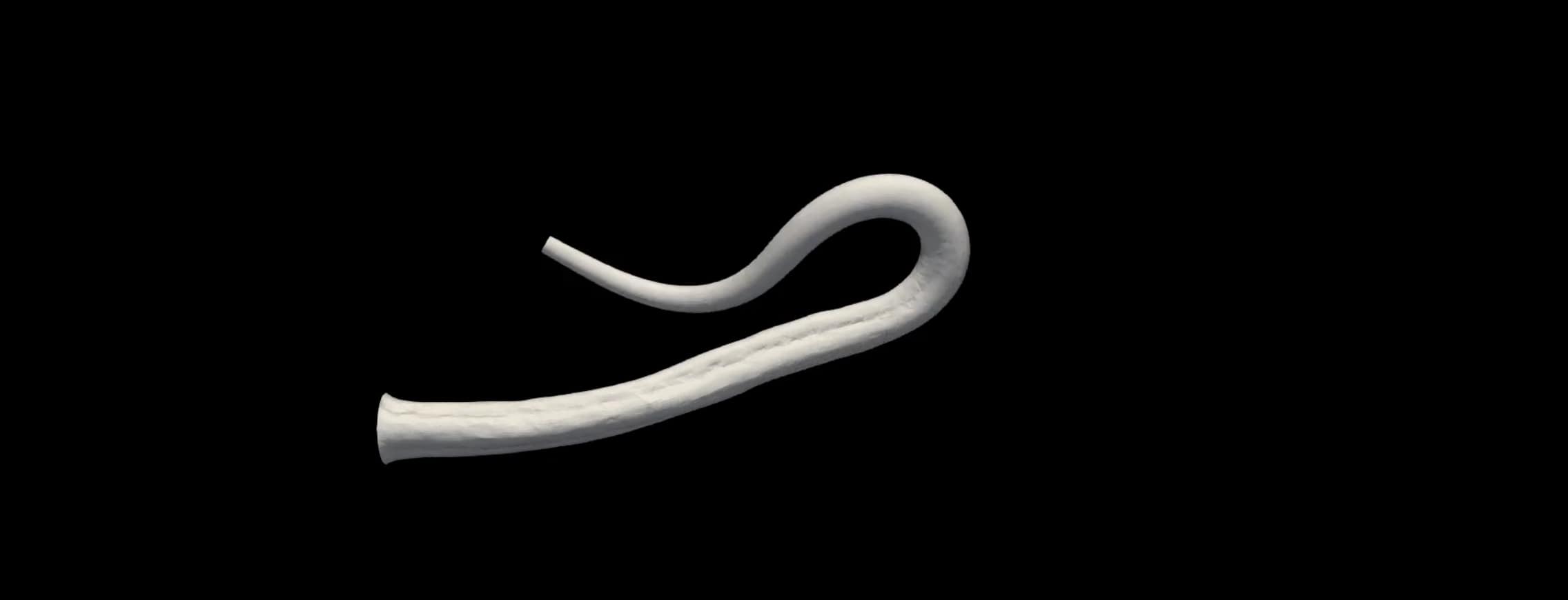
Octopus arm movements unveiled: a computational modeling approach to muscle activation-driven biomechanics
Adamya Singh Dhaker*, Yuchen Sun*, Michele Bucelli, Francesco Regazzoni, Luca Dede', Letizia Zullo, Cecilia Laschi, Gianmarco Mengaldo * represents equal contribution. Under Review TL;DR: The octopus arm is a remarkable example of embodied intelligence. Densely-packed muscle fibers provide the arm with virtually infinite degrees of freedom. Biologists have used EMG signals to hypothesize which muscle synergies create canonical octopus arm movements. We created an anatomically accurate model of the octopus arm, with spatially arranged muscle fibers, to verify whether experimentally proposed synergies truly create the observed canonical movements. |
|
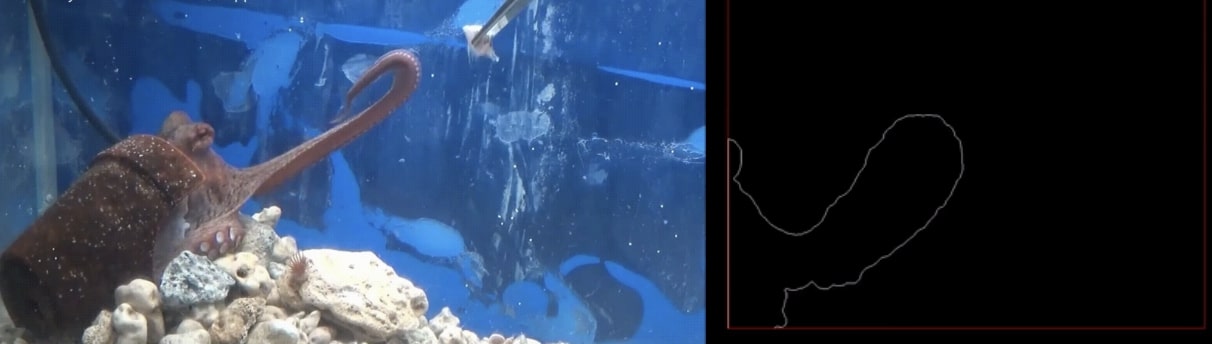
Computer Vision-Based Kinematics Extraction from Octopus Arm Reaching Motion Videos
Adamya Singh Dhaker, Rayner Lim Fang Yuh, Say Yong Lim, Haozheng Zhang, Xie Yiang Ooi, Letizia Zullo, Gianmarco Mengaldo, Cecilia Laschi Internal Technical Report TL;DR: Obtaining octopus arm kinematics are notoriously difficult. Here, we build our own markerless octopus arm centreline detection algorithm that extracts and post-processes the kinematics features of octopus arms during movement |
|
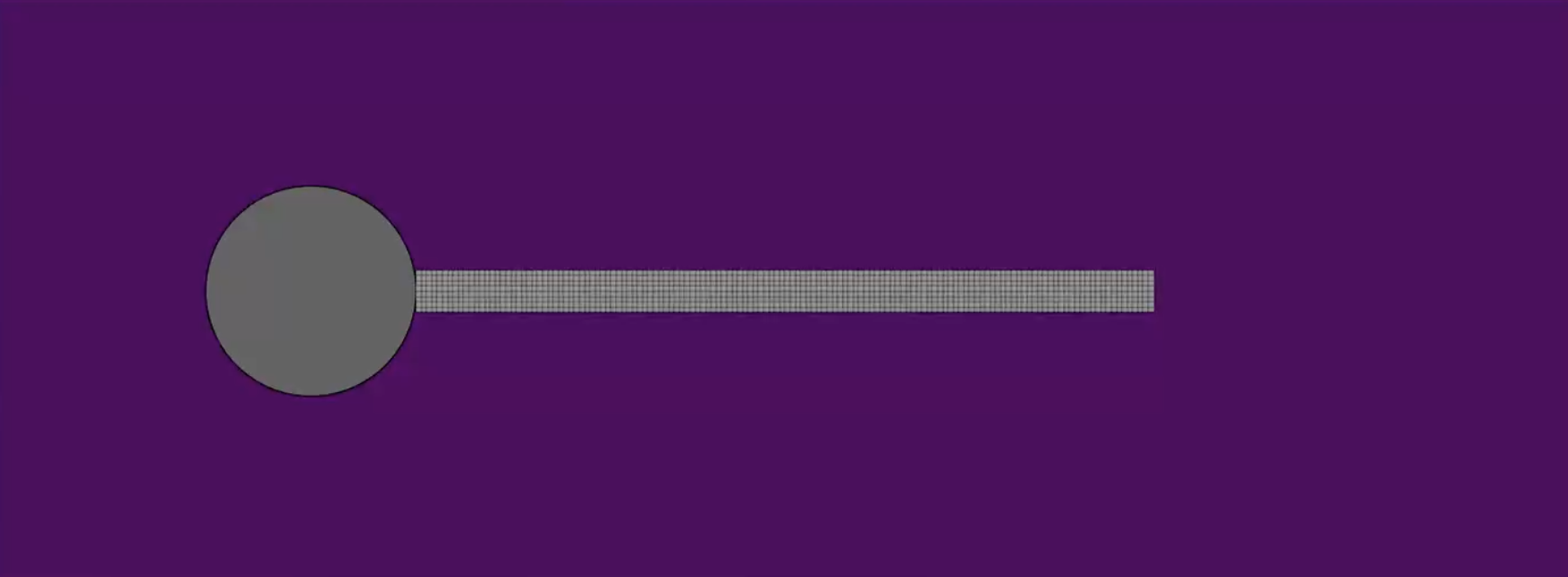
Energy-Minimization-Based Fluid-Structure Interaction for Biohybrid Robots
Adamya Singh Dhaker, Manuel Mekkattu, Mike Yan Michelis, Robert Katzschmann Paper Under Preparation TL;DR: We want need accurate fluid-solid coupling to simulate end-to-end multiphysics of biohybrid swimmers. Turns out, pressure projection (a.k.a mass conservation) in a Navier-Stokes solve can be treated as an energy minimization problem to advance a fluid-solid solve and obtain fast simulations. |
Miscellanea |
Academic Service |
|
Teaching |
|
Hobbies |
|
|
This website template has been borrowed, with gratitude, from this source code by Jon Barron. Last Updated: October 2026 |